
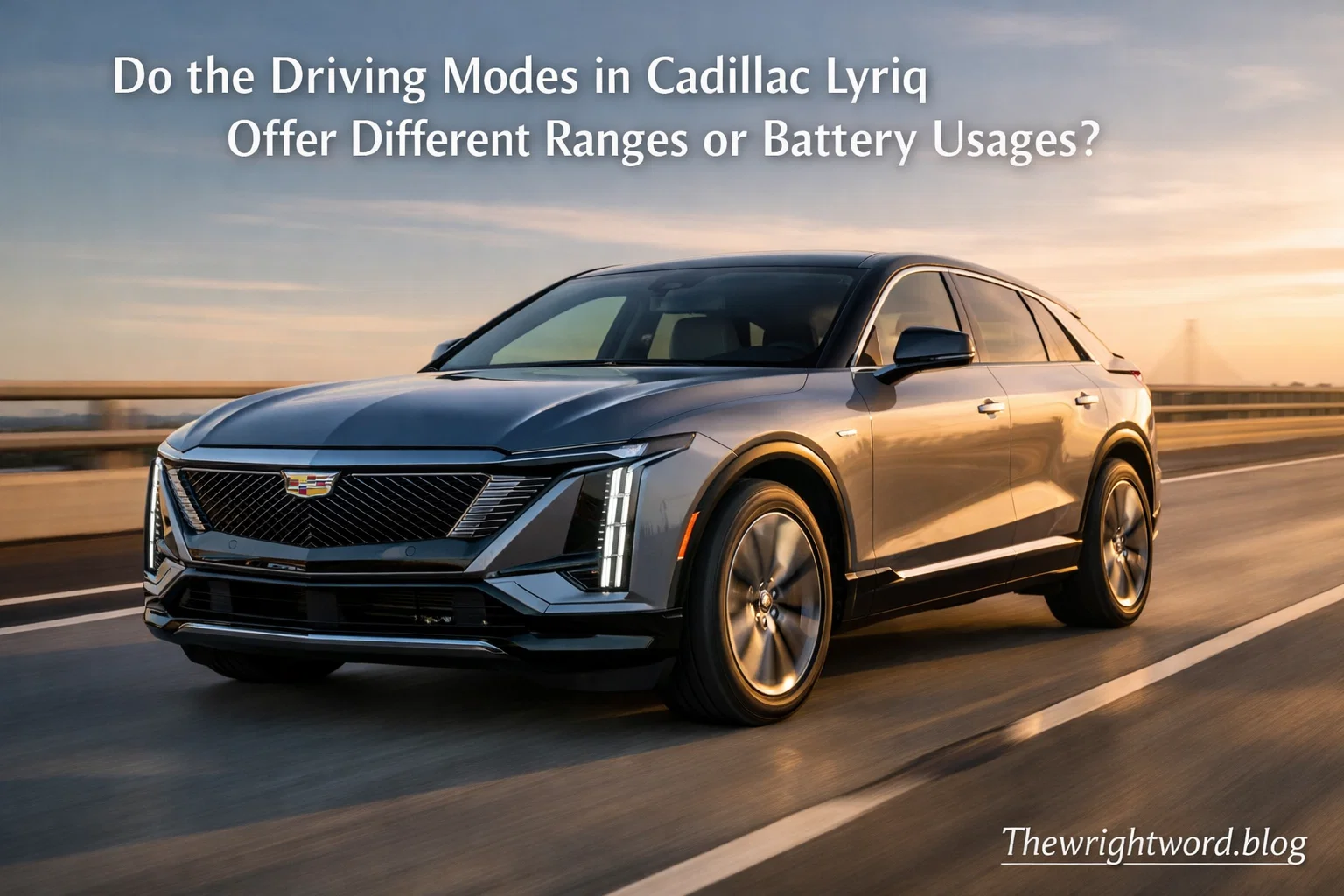
Electric vehicles are changing how people think about driving, efficiency, and energy use. The Cadillac Lyriq stands out in this shift because it blends luxury with advanced EV technology. One of the most common questions new buyers and curious drivers ask is whether the different driving modes in the Lyriq actually change driving range or battery usage. This is a smart question, because unlike gas vehicles, electric cars respond very clearly to driving behavior and software settings.
Driving modes in an electric vehicle are not just cosmetic features. They directly influence how power is delivered from the battery to the motors, how aggressively the vehicle accelerates, and how much energy is recovered through regenerative braking. These changes can absolutely affect how quickly the battery drains and how far you can drive on a single charge.
This article explains, in practical and real-world terms, how Cadillac Lyriq driving modes work, whether they change range, and how drivers can use them wisely. The goal is not marketing talk, but clear, useful information that helps real drivers make better decisions every day.
Understanding Driving Modes in an Electric Vehicle
Driving modes are software-controlled settings that adjust how a vehicle behaves. In the Cadillac Lyriq, these modes change throttle response, steering feel, regenerative braking intensity, and power delivery from the electric motors. While the battery itself does not physically change, the way energy is used does change depending on the selected mode.
In simple terms, think of the battery as a water tank. The driving mode does not increase or decrease the size of the tank, but it controls how fast the water flows out. A gentle flow allows the water to last longer, while a fast flow empties the tank more quickly. Driving modes control that “flow” of energy.
This is especially important in electric vehicles because electric motors deliver instant torque. Small changes in throttle sensitivity or power limits can have a noticeable effect on energy consumption, especially during city driving or aggressive acceleration.
Does the Cadillac Lyriq Battery Change With Driving Modes?
One important fact must be very clear: the Cadillac Lyriq’s battery capacity does not change when you switch driving modes. Whether you are in Tour Mode, Sport Mode, Snow/Ice Mode, or My Mode, the battery remains the same size with the same usable kilowatt-hours.
What does change is how the vehicle allows you to use that energy. Some modes allow faster acceleration and higher power draw, while others limit power output and encourage smoother driving. This difference is where range gains or losses come from.
So when people ask if driving modes “offer different ranges,” the honest answer is yes in practice, but no in hardware. The range changes because your energy usage changes, not because the battery itself is different.
Tour Mode and Its Effect on Range and Efficiency
Tour Mode is the default driving mode in the Cadillac Lyriq and is designed for everyday use. It offers balanced acceleration, smooth steering, and moderate regenerative braking. This balance helps keep energy consumption steady and predictable, which is ideal for maximizing driving range.
In Tour Mode, the throttle response is not overly aggressive. When you press the accelerator, the vehicle responds smoothly rather than instantly dumping power from the battery. This prevents unnecessary energy spikes, especially in stop-and-go traffic where efficiency matters most.
For most drivers, Tour Mode delivers the closest real-world results to the EPA-estimated range. If your goal is daily commuting, highway driving, or long trips between charging stops, Tour Mode is usually the most efficient and practical choice.
Sport Mode and Increased Battery Usage
Sport Mode changes the personality of the Cadillac Lyriq. Acceleration becomes sharper, steering feels more direct, and the vehicle responds more aggressively to driver input. This mode is designed to make the SUV feel quicker and more engaging.
However, sharper acceleration means higher power draw from the battery. Electric motors can pull large amounts of energy very quickly, and Sport Mode allows this more often. Over time, this results in higher energy consumption per mile.
In real-world terms, drivers may notice:
- Faster battery percentage drop during city driving
- Slightly reduced total range on a full charge
Sport Mode is best used when performance is the priority, not efficiency. Occasional use is fine, but using it constantly will reduce how far you can drive between charges.
Snow and Ice Mode and Real-World Energy Impact
Snow/Ice Mode is designed for safety rather than performance or efficiency. It softens throttle response, limits wheel spin, and adjusts traction control to maintain stability on slippery roads. This mode is especially useful in winter climates.
From an energy perspective, Snow/Ice Mode can be tricky. On one hand, gentler acceleration can reduce sudden power draws. On the other hand, constant traction control intervention and winter driving conditions can increase overall energy use.
Cold temperatures already reduce EV range because batteries are less efficient in the cold and cabin heating uses significant energy. So while Snow/Ice Mode itself is not a major range killer, it is usually used in conditions that naturally lower range.
My Mode and Personalized Energy Usage
My Mode allows drivers to customize how the Lyriq behaves. You can mix and match settings for acceleration, steering, and braking to suit your preferences. This flexibility makes My Mode powerful, but it also makes energy usage less predictable.
If you configure My Mode with gentle throttle response and strong regenerative braking, it can perform similarly to Tour Mode in terms of efficiency. If you choose aggressive acceleration settings, it will behave more like Sport Mode.
The key advantage of My Mode is control. Drivers can fine-tune their experience based on daily needs, such as comfort during commuting or responsiveness during short trips, while still managing battery usage intelligently.
Regenerative Braking and Driving Modes
Regenerative braking plays a huge role in how driving modes affect range. When you slow down, the electric motors act as generators and send energy back into the battery. Different modes adjust how strong this regeneration feels.
Stronger regenerative braking can increase efficiency, especially in city driving where frequent stops allow more energy recovery. Softer regeneration may feel smoother but can reduce how much energy is recovered.
In practical driving, combining efficient modes with smart regenerative braking habits can:
- Reduce brake wear
- Improve overall range in urban environments
Understanding how your chosen mode handles regeneration helps you drive more efficiently without even thinking about it.
City Driving vs Highway Driving Across Modes
Driving modes affect city and highway driving differently. In city traffic, where acceleration and braking are frequent, aggressive modes can quickly drain the battery. Smooth modes shine here by minimizing energy spikes and maximizing regeneration.
On the highway, steady speed matters more than mode selection. Aerodynamics and speed have a greater impact on range than throttle response alone. However, Sport Mode can still increase energy use if it encourages higher cruising speeds or frequent acceleration.
For best results, many drivers use:
- Tour Mode in cities and long highway drives
- Sport Mode for short, enjoyable trips
Matching the mode to the driving environment is one of the easiest ways to manage battery usage.
Real-World Driving Habits Matter More Than Modes
While driving modes do affect range, driving habits matter just as much, if not more. Rapid acceleration, high speeds, frequent lane changes, and heavy HVAC use can reduce range regardless of mode.
A calm driving style in Sport Mode can sometimes outperform aggressive driving in Tour Mode. This shows that modes are tools, not guarantees. The driver still plays the biggest role in efficiency.
Think of driving modes as guidelines. They influence behavior, but they do not override physics or driving choices. Awareness and consistency are just as important as software settings.
Read More: Troozer com: A Detailed Guide to Understanding the Platform
Final Thoughts on Driving Modes and Cadillac Lyriq Range
So, do the driving modes in the Cadillac Lyriq offer different ranges or battery usages? Yes, they do, but indirectly. The battery does not change, but the way energy is used changes meaningfully depending on the selected mode.
Tour Mode is best for efficiency and predictable range. Sport Mode delivers excitement at the cost of higher battery usage. Snow/Ice Mode prioritizes safety in difficult conditions, while My Mode offers flexibility with responsibility.
The smartest approach is balance. Use the mode that fits your situation, understand how it affects energy use, and drive with awareness. When you combine the right mode with good driving habits, the Cadillac Lyriq delivers both luxury and efficiency without compromise.
